

Sugar & Health
Honey, Dates or Stevia: What Changes When You Swap Sugar?
Natural, sugar-free and less sweet mean different things. A balanced guide to choosing alternatives for drinks, breakfast and home baking.
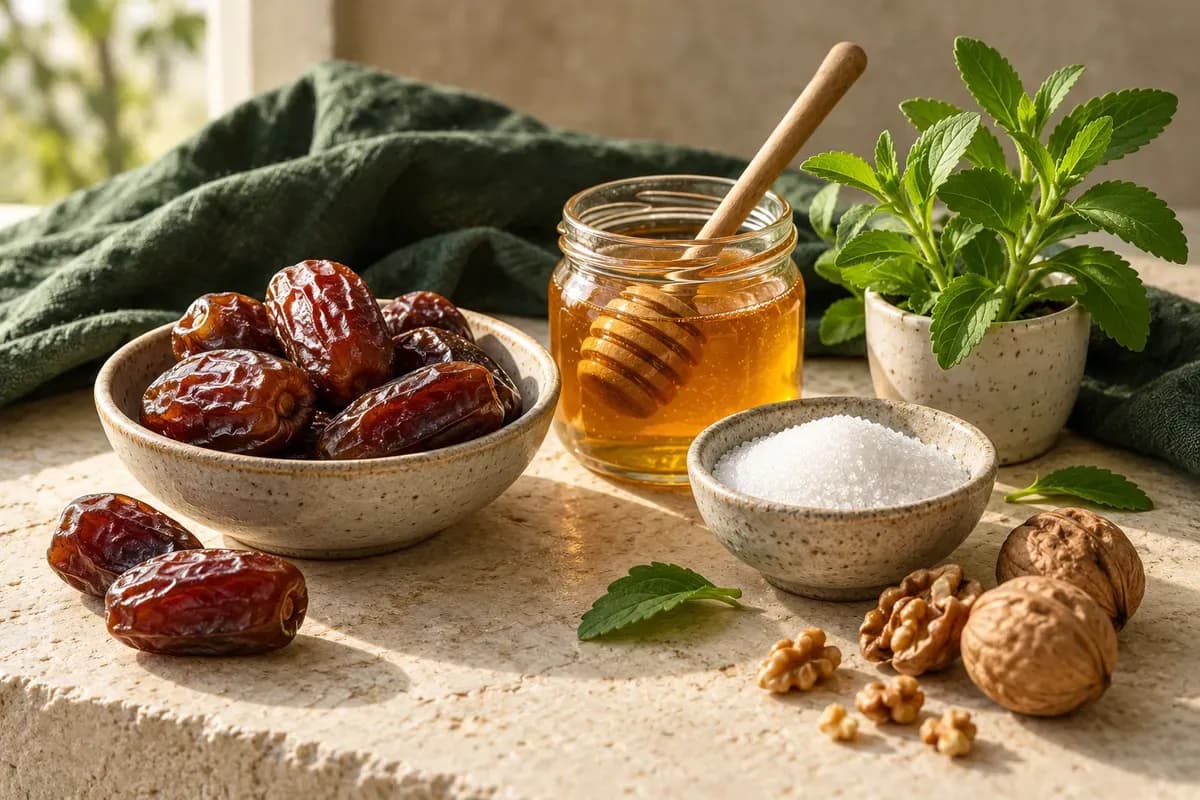
Honey, dates and stevia can all change the way you sweeten food, but they do different jobs. Honey adds sugar, moisture and flavour. Dates bring a whole-food ingredient with sweetness and texture. Stevia-based sweeteners can add sweetness without using table sugar, depending on the product. The useful question is what you want the swap to change.
Perhaps you want a less-sweet breakfast, a cookie that holds together or a different flavour in tea. Those are three separate goals. A good choice for one may be awkward for another. This guide compares the roles of common alternatives without ranking them as miracle ingredients or telling you that natural automatically means better for your health.
Start with the job the sugar is doing
In a cup of tea, you may mainly want sweetness. In a cake, sugar also affects the finished texture and browning, so changing it can alter the recipe. In an oat snack, mashed fruit or dates may help bind ingredients. Before swapping, identify whether you are changing flavour, sweetness, structure or the amount of sugar in the finished portion.
That also helps you choose a realistic measure of success. A breakfast can taste less sweet without becoming completely sugar-free. A date-based snack can be enjoyable without being lower in sugar than every biscuit. A recipe that works for your household may be worth keeping even if you decide to make a smaller portion rather than change its ingredients.
Honey: a flavour choice, still a source of free sugars
WHO includes the sugars in honey and syrups in its definition of free sugars. See its sugars-intake guidance. Replacing table sugar with honey therefore does not remove free sugars from a drink or a recipe.
Honey may be useful when you specifically want its flavour. A small drizzle on plain yoghurt could give you a different result from a heavily sweetened yoghurt, but the overall amount depends on what you use. Pouring freely because the ingredient seems natural is not a reliable way to reduce sugar. Decide the amount deliberately and taste before adding more.
For baking, find a recipe designed for honey rather than assuming a spoon-for-spoon substitution will work. Honey contributes liquid as well as sweetness, and its flavour may dominate a delicate bake. If your real aim is a less-sweet result, consider whether you need a replacement at all. You may simply prefer a recipe that starts with less sweetening.
Dates: useful ingredients, not sugar-free shortcuts
Whole dates can provide sweetness and a sticky texture that is useful in some snacks. Chopped dates, date paste and date syrup are different ingredients; the amount and form matter. A recipe containing dates still contains sugars. Describing it as sugar-free because it has no spoonful of white sugar would mislead the person deciding whether to eat it.
There is also no reason to assume that a date-based recipe is interchangeable with eating fresh fruit. Think about the complete snack: its ingredients, portion, preparation and what you enjoy about it. If you want a chewy cocoa bite, dates might serve that purpose well. If you want a crisp biscuit, the same substitution may take you further from the result you had in mind.
Our Date, Walnut and Cocoa Bites use dates as part of a specific recipe. Treat them as a snack to portion and enjoy, rather than a therapeutic food. They contain walnuts, so check allergens and suitability for anyone you plan to share them with.
Stevia: separate sweetness from long-term health promises
Stevia-based products vary. A concentrated sweetener is not the same as a spoonable blend containing other ingredients, so read the label and follow the product’s cooking instructions. A product that sweetens a drink may not supply the bulk needed in a cake. Avoid copying a measurement from one product to another just because both use the word stevia.
WHO’s summary of its non-sugar-sweetener recommendation includes stevia derivatives. The guidance is conditional and addresses long-term weight control and disease prevention; it should not be presented as proof that a particular sweetener is poisonous. It also does not apply to people with pre-existing diabetes.
For everyday cooking, first ask whether you like the result. If an intensely sweet replacement leaves you wanting the same level of sweetness in every meal, you could try a different direction: less sweetening overall. That is an option to explore, not a claim that taste will reset on a fixed timetable. There is no universal seven-day programme you need to follow.
Choose the change that matches the meal
For tea or coffee, try reducing the amount you already add before buying a new ingredient. For plain yoghurt, add fruit if you enjoy its flavour and texture. For oats, try fruit, nuts or cinnamon for variety, while remembering that cinnamon does not magically cancel sugar. For baking, choose a recipe developed for the ingredients you want to use.
For a familiar dessert, another option is to keep its ingredients and make it less often or serve a portion that suits the meal. You do not have to remake every celebration food into a different product. Keeping sweetness for food you particularly enjoy may be easier than searching for an ingredient that makes every sweet food nutritionally unlimited.
For more cooking ideas, browse the GRZ recipe collection. Recipes show what ingredients do together, which is more useful than choosing a substitute from its name alone. Check quantities and any dietary notes before assuming a recipe meets a particular need.
Read the claim, then read the product
Sugar-free and no added sugars are different EU claims. Our EU food-label guide explains how to interpret them. Look at both the ingredient list and sugars per 100 g/ml before deciding whether a packaged alternative meets your aim.
Keep the bigger picture in view with Sugar & Health. The goal is a practical eating pattern, not a perfect substitute. Choose one meal or recipe, make a deliberate change, and judge whether it actually helps you cook and eat in the way you want.
Sources and editorial note
WHO: Guidance on reducing free sugars, 2015
WHO: Non-sugar-sweetener recommendation and its limitations, 2023
WHO: Use of non-sugar sweeteners, full guideline
European Commission: Nutrition claims
Prepared for GRZ’s public education pages with AI assistance. Sources checked on 18 October 2026. This article has not received clinical or medical review. Examples are illustrative, not product endorsements or individual dietary advice. If you manage diabetes or another condition affecting your diet, ask a qualified healthcare professional about changes appropriate for you.
Keep exploring
A little more food for thought.

How to Reduce Sugar in Drinks Without Giving Up Flavour
Keep the coffee break, change the default. Simple drink swaps, a useful label calculation and a flexible plan for your everyday routine.
Read article
How to Read Sugar on Food Labels: An EU Shopping Guide
Turn the packet around. A practical guide to total sugars, ingredient lists and no-added-sugar claims, with a simple EU label comparison.
Read article